
Heating & AC FAQs | Tucson, AZ
Frequently Asked Questions – HVAC in Tucson, Arizona
We are your local Tucson Heating and Air Pros, and over the years we have heard just about every question a Tucson homeowner can have about their heating and air conditioning system. This page exists because we believe informed homeowners make better decisions — about when to call for service, what to expect from a repair, how to care for their system, and when it genuinely makes sense to replace aging equipment. The answers here come from real experience serving homes throughout Tucson, from midtown and the east side to Marana, Sahuarita, Oro Valley, and Vail.
Tucson is a unique HVAC market. The summer cooling season runs roughly five months and puts sustained stress on air conditioning equipment that most other regions in the country never see. The winter heating season is mild but real — cold fronts in December and January push overnight temperatures into the 20s in parts of Pima County, and furnaces that sat idle all summer need to perform when that happens. Ductless mini split systems have become increasingly popular in the older homes and casitas throughout the city where traditional ductwork is not practical. Boilers serve a small but real segment of custom and historic properties. Emergency situations in July at 108 degrees are not unusual, and neither are calls on the first cold November night from a furnace that has not fired since March.
We are the trusted local HVAC experts in Tucson, and we handle all of it — AC repair and installation, furnace repair and installation, boiler repair and installation, ductless mini split repair and installation, and emergency service throughout the Tucson area. The questions and answers below cover every service we provide and every common concern we hear from Tucson homeowners. If you have a question that is not answered here, contact us today and we will get you a straight answer from someone who actually knows your climate and your home type.
General Heating and Air Conditioning Questions in Tucson
How often should I have my HVAC system serviced in Tucson?
We recommend two service visits per year for most Tucson homes: an AC tune-up in late winter or early spring before the cooling season, and a furnace or heating system service in early fall before the heating season. Tucson’s long AC-only season means the cooling system works extremely hard from June through September, and pre-season service catches developing problems before they become emergency failures. The fall heating service addresses dust and component degradation that builds up during the long summer off-season when your furnace sits idle.
What is the lifespan of an HVAC system in Tucson?
Air conditioning equipment in Tucson realistically lasts 12 to 16 years, somewhat shorter than in milder climates because of the sustained summer heat load. Furnaces last longer — 18 to 25 years is typical here because the heating season is relatively short. Heat pumps fall in the 15 to 18 year range. Ductless mini splits generally last 15 to 20 years with proper maintenance. These are ranges for well-maintained systems — units that go without service regularly or that operated with persistent issues such as refrigerant leaks or restricted airflow will reach the end of useful life earlier.
Why are my energy bills higher even though my HVAC system seems to be running?
Rising energy costs without an obvious change in usage usually point to declining system efficiency. In Tucson, the most common culprits are dirty condenser coils on the outdoor AC unit reducing the system’s ability to reject heat, a slow refrigerant leak that has reduced the charge enough to affect efficiency, dirty evaporator coils or a clogged filter restricting airflow, or aging compressor components that are working harder than they should. We can diagnose the specific cause during a system assessment. Sometimes the issue is also ductwork leakage — older Tucson homes often have supply duct leaks that send conditioned air into the attic rather than into living spaces.
What temperature should I set my Tucson thermostat during summer?
Most energy professionals recommend 78 degrees as a baseline during Tucson summers while balancing system load and comfort. Every home is different — insulation quality, window exposure, ceiling height, and number of occupants all affect how hard the system has to work to maintain a given setpoint. A well-maintained, correctly sized system in a Tucson home should hold 78 degrees comfortably through typical summer days. If your system cannot maintain that setpoint without running continuously, that is worth investigating — it usually points to a maintenance or sizing issue rather than a problem with the setpoint itself.
Should I be concerned about Tucson’s dust and its effect on my HVAC system?
Yes — this is a real issue specific to the Tucson climate. Desert dust, caliche particulates, and seasonal pollen load air filters significantly faster than in more humid regions. During peak dust season and the monsoon transition, we generally recommend checking filters monthly and replacing every four to six weeks. Dust also accumulates on condenser coils, evaporator coils, and furnace burner surfaces over time. Professional cleaning of these components annually is more important in Tucson’s dusty environment than it would be in a city with cleaner ambient air.
Air Conditioning Repair and Installation FAQs in Tucson
Why is my AC running but not cooling my Tucson home?
The most common causes in Tucson are a refrigerant leak that has reduced the charge to the point where cooling capacity is significantly impaired, a dirty or restricted condenser coil preventing adequate heat rejection in the outdoor heat, a capacitor failure that is causing the compressor to run weakly or intermittently, or a frozen evaporator coil from restricted airflow. Each of these produces a different set of secondary symptoms, and accurate diagnosis before any repair begins is essential. We identify the actual cause on every AC call in Tucson rather than starting with the most common repair and hoping it resolves the issue.
How do I know if my Tucson AC needs a refrigerant charge?
Signs that point toward low refrigerant include declining cooling performance over weeks rather than suddenly, ice forming on the refrigerant lines or indoor coil, longer run times without reaching the set temperature, and in some cases a hissing or bubbling sound from the refrigerant lines. Low refrigerant is always the result of a leak — refrigerant does not simply deplete over time. Adding refrigerant without finding and repairing the leak is a temporary fix. We locate the leak source and repair it before adding any refrigerant on a Tucson AC service call.
What size air conditioner does my Tucson home need?
Correct sizing requires a Manual J load calculation that accounts for your home’s square footage, insulation levels, window area and orientation, ceiling height, and Tucson’s specific climate data. In Tucson, high solar gain through south and west-facing windows and extreme summer temperatures create higher cooling loads per square foot than many other regions. Oversizing results in short-cycling and poor dehumidification during monsoon season. Undersizing results in the system running continuously and never maintaining the setpoint on the hottest days. We calculate the correct size for your specific Tucson home rather than using a square-footage rule of thumb.
When is the best time to replace my AC system in Tucson?
Late winter to early spring — February through April — is the best time for most Tucson homeowners. Replacing before the summer cooling season begins means you are not making the decision under emergency pressure in July heat, scheduling flexibility is better, and you have time to evaluate equipment options carefully. A system replaced in the off-season is also commissioned and verified before it is needed for serious cooling demand. We can assess your current system any time of year and give you an honest read on how much useful life it likely has remaining.
Can I convert from evaporative cooling to central AC in my Tucson home?
Yes, and it is a project we handle throughout Tucson. Tucson’s monsoon season makes evaporative cooling unreliable from July through September — the elevated humidity during those months reduces evaporative cooling effectiveness significantly. Converting to refrigerant-based central AC requires adding a split system, which may involve new ductwork in homes that currently have only evaporative distribution, or modification of existing ductwork to support a different airflow configuration. Contact us today to discuss what a conversion would involve in your specific Tucson property.
Furnace and Heating Repair and Installation FAQs in Tucson
Why does my Tucson furnace smell when I first turn it on in fall?
A mild dusty or burning smell on the first few heating cycles of the Tucson fall season is normal — it is dust burning off the heat exchanger and burners after sitting idle since spring. This should clear within two or three cycles. A persistent burning smell, a smell of melting plastic or rubber, or any sulfur or rotten-egg odor is not normal and warrants shutting the system off and calling for professional service immediately. If you smell gas or suspect a gas leak, go outside immediately and call 911 – this is a serious emergency that needs urgent attention from the gas company.
How often should a Tucson furnace be serviced?
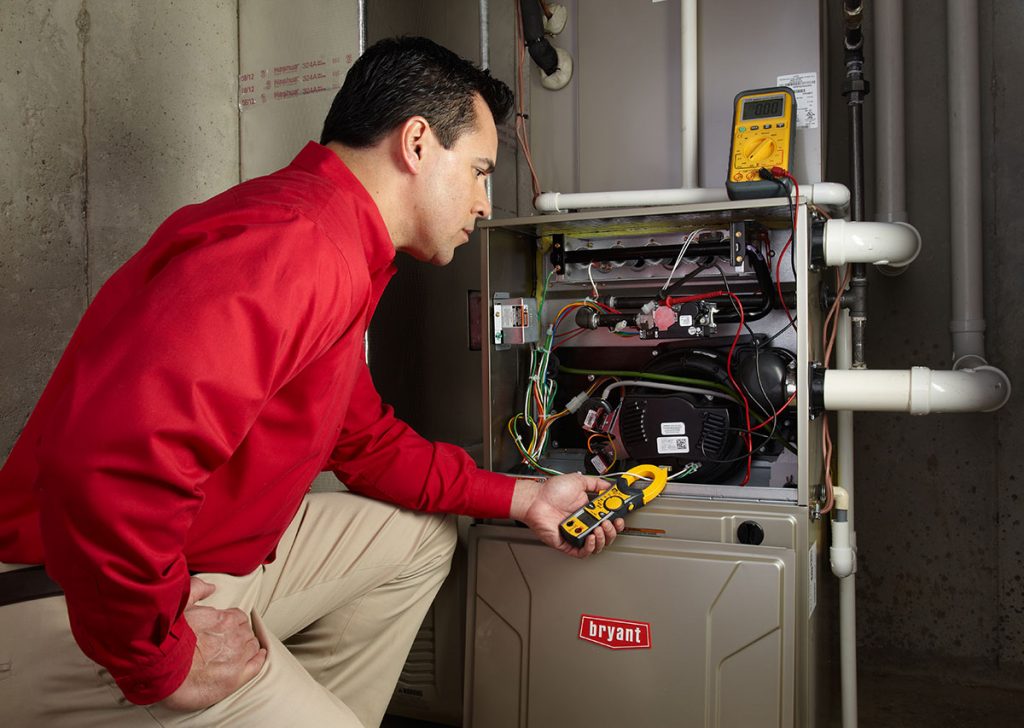
Annual service in early fall — before the heating season begins — is the standard recommendation for Tucson furnaces. Given the long summer off-season here, fall service addresses dust accumulation that developed over months of non-use, inspects the heat exchanger for any developing issues, tests ignition components, and verifies safety controls before the system is relied upon for winter heat. Problems found during fall service are almost always less expensive and less disruptive to address than the same problems found during a heating failure on a cold January night.
What is a heat exchanger and why should I care about it in my Tucson furnace?
The heat exchanger separates the combustion gases inside the furnace from the air that circulates through your Tucson home. When it is intact and working correctly, combustion stays on one side and your indoor air stays safely on the other. When it develops a crack — which happens over time from repeated thermal cycling — combustion gases including carbon monoxide can enter the living space air stream. CO is colorless and odorless, and exposure to elevated levels in a home is a serious health hazard. We inspect the heat exchanger on every furnace service call in Tucson because it is the most critical safety component in any gas furnace.
My Tucson furnace is short-cycling. What causes that?
Short-cycling — turning on, running briefly, and shutting off before the home reaches the setpoint — most commonly results from a clogged air filter causing the heat exchanger to overheat and trip the high-limit safety switch, a furnace that was oversized for the home and heats the area near the thermostat too quickly, or a thermostat placed in a location that sees localized heat sources. A cracked heat exchanger that causes the limit switch to trip as a safety response is a less common but more serious cause. We identify the specific reason for your Tucson furnace’s short-cycling rather than making assumptions.
Is a heat pump worth considering for my Tucson home instead of a furnace?
For Tucson’s relatively mild winters, heat pumps are a genuinely practical choice — especially for homes without existing gas service or for homeowners who prefer electric heating. Heat pumps are efficient through most of Tucson’s winter season, only becoming less effective when outdoor temperatures drop into the low 20s, which is uncommon at valley floor elevations. A heat pump also handles all of your summer cooling from the same system, which makes it attractive for homeowners replacing older equipment in both seasons. We can evaluate whether a heat pump makes more sense than a furnace for your specific Tucson home and usage patterns.
Boiler Repair and Installation FAQs in Tucson
Why is my Tucson boiler losing pressure?
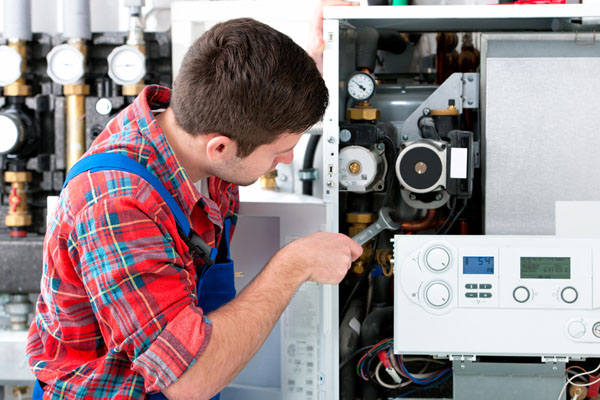
A boiler that requires frequent water additions to maintain pressure has a leak somewhere in the system, a failing expansion tank that can no longer buffer system pressure changes, or a pressure relief valve that is weeping or discharging periodically. The leak can be at any of many connection points throughout the distribution piping. An expansion tank with a failed internal bladder fills with water and loses its ability to absorb pressure increases as the system heats up, causing the relief valve to discharge to compensate. We assess the full system to identify which of these is causing the pressure loss in your Tucson boiler system.
Why are some of my radiators or baseboard zones cold in my Tucson home?
A zone that is not heating may have a stuck or failed zone valve not opening when the thermostat calls for heat, a circulator pump not moving water through that circuit, air trapped in the distribution piping blocking flow in that zone, or a wiring or thermostat fault specific to that zone’s control circuit. Each cause requires a different repair. We trace the symptom through the full zone system rather than replacing the most likely component first and hoping it resolves the issue.
How long do boilers last in Tucson?
Cast iron boilers in good condition can last 25 to 30 years. Steel boilers typically reach 15 to 20 years. Tucson’s mild heating season means fewer annual operating hours than colder markets, which generally extends service life. The main factor that accelerates aging in Tucson boilers is Tucson’s mineral-heavy water supply, which can cause scale accumulation on heat exchanger surfaces over time. Annual service that includes combustion analysis and system pressure checks identifies developing issues before they become major failures.
Do you service boilers in Tucson even though they are uncommon here?
Yes. Boilers exist throughout Tucson in older custom homes, historic properties, and some commercial-to-residential conversions, and when one of these systems needs service, the homeowner deserves a technician who actually knows the system. We are your local Tucson Heating and Air Pros and we service and install boilers throughout the metro area with the same diagnostic depth we bring to forced-air systems. Contact us today if your Tucson home has a boiler that needs professional attention.
Ductless AC and Mini-Split Repair and Installation FAQs in Tucson
What is a ductless mini split and is it right for my Tucson home?
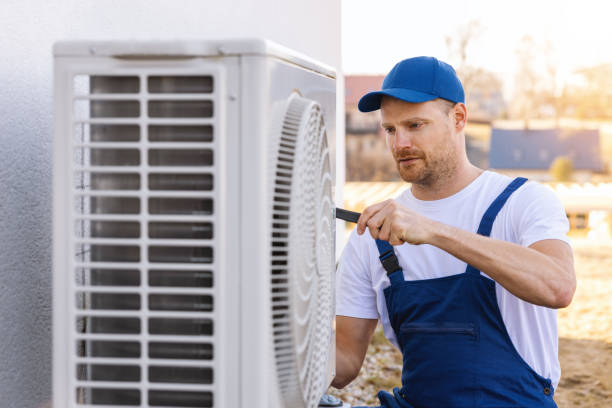
A ductless mini split is a split-system heat pump that connects an outdoor condenser to one or more indoor air handler units through a small refrigerant line set, without needing ductwork. They are ideal for Tucson homes without existing ductwork, for room additions, casitas, converted garages, and spaces where running new ductwork would be impractical or expensive. In Tucson’s climate, they handle the cooling load very effectively, and modern low-ambient models also provide efficient heating through most of the winter season. We install and service ductless systems throughout the Tucson area.
Why is my ductless mini split dripping water in my Tucson home?
During Tucson’s monsoon season, indoor humidity levels rise substantially, and your ductless unit removes significantly more moisture from the air than it does during the dry spring or fall. A condensate drain line that handles normal dry-season moisture adequately may clog or back up under the increased July and August condensate volume. This is one of the most common ductless service calls we handle across Tucson during monsoon season. We clear the drain line completely and verify free flow before we close the call, rather than just clearing the visible blockage at the drip point.
What does the error code on my Tucson ductless mini split mean?
Error codes on ductless systems are manufacturer-specific — the same code number means different things on different brands. Common faults indicated by error codes include refrigerant pressure abnormalities, temperature sensor failures, communication errors between the indoor and outdoor units, and protection lockouts from abnormal operating conditions. When you contact us, telling us the brand and the displayed code helps us prepare for the most likely fault before we arrive. We diagnose using the code combined with live system readings rather than simply clearing the code and hoping the problem does not recur.
How long does ductless mini split installation take in a Tucson home?
A single-zone installation in a typical Tucson home, casita, or room addition takes four to six hours from start to finish. Multi-zone installations with multiple indoor heads take longer depending on the number of zones and the complexity of line set routing through the home. We assess the specific installation location, evaluate drainage routing and electrical requirements, and give you a realistic timeline before we schedule the work. Most single-zone ductless installations in Tucson are completed in one day.
Emergency HVAC Repair FAQs in Tucson
What is the most common emergency HVAC call in Tucson?
Capacitor failure in the summer months is the single most common emergency call we handle across Tucson. Run and start capacitors for the compressor and condenser fan motor degrade faster in Tucson’s sustained high-temperature environment than in milder climates, and they tend to fail during heat events when the system is running at maximum load. A capacitor failure typically causes the outdoor unit to stop running while the air handler continues to blow room-temperature air inside. The good news is that most capacitor failures can be resolved in a single visit — we carry these parts on every truck.
Should I reset my tripped AC breaker if it trips again?
Reset a tripped breaker once — a single nuisance trip can occur from a momentary power event. If the breaker trips again after reset, stop resetting it. A breaker that trips repeatedly is responding to an actual electrical overload or fault. Continuing to reset it risks damage to the wiring or equipment, and in some cases the breaker is the only thing preventing a more serious electrical failure. Contact us today for a diagnostic before operating the system further.
Can I find emergency HVAC service near me in Tucson after hours?
Yes. We handle after-hours and weekend emergency HVAC calls throughout Tucson. Contact us today and describe the situation — complete cooling failure during summer heat and complete heating failure during cold weather get priority response. We are a local Tucson company, not a national dispatch service routing calls to an out-of-area contractor.
How hot can a Tucson home get before it is dangerous without AC?
Indoor temperatures above 90 to 95 degrees create health risk conditions for elderly individuals, young children, and anyone with cardiovascular or respiratory conditions. In Tucson summer heat, a home with a failed AC can reach 95 to 100 degrees indoors within several hours on a day when outdoor temperatures are above 105. This is the reason we treat complete cooling failures in Tucson summer as genuine emergencies. If your home is approaching dangerous temperatures, consider moving vulnerable household members to a cooler location while you wait for service. Contact us today — the sooner we know, the sooner we can respond.
Service Area and Scheduling Questions for Tucson
What areas does Tucson Heating and Air Pros serve?
We serve all of Tucson and the surrounding communities throughout the greater Tucson metro area and Pima County. Our service area includes midtown Tucson, the east side, the Catalina Foothills, south Tucson, the University of Arizona district, Marana, Oro Valley, Sahuarita, Green Valley, Vail, Rita Ranch, Flowing Wells, and Drexel Heights. If you are not sure whether we cover your specific location, contact us today and we will let you know immediately.
How far in advance should I schedule HVAC service in Tucson?
For routine maintenance and non-urgent repairs, scheduling two to four weeks ahead is generally comfortable outside of peak season. In late spring — April and May — when many Tucson homeowners schedule AC tune-ups before the summer, availability fills up faster and earlier scheduling is wise. For emergency situations, we work to respond as quickly as possible regardless of current schedule volume, with priority given to situations involving genuine health or safety risk. For planned replacements or installations, we appreciate more lead time to order equipment and schedule the work day appropriately.
Do you offer HVAC maintenance agreements in Tucson?
Contact us today to discuss service plan options for your Tucson home. Regular maintenance relationships with local Tucson homeowners allow us to track your system’s history, catch developing issues early, and schedule seasonal service before the peak demand periods when scheduling becomes tight. Reach out to us for assistance setting up ongoing service for your home.
Why Tucson Homeowners Keep Coming Back to Tucson Heating and Air Pros
We have been serving Tucson homes for years, and the reason homeowners across the Tucson metro keep calling us is straightforward: we show up, we diagnose accurately, we explain things honestly, and we fix the problem correctly the first time. That is not a complicated formula, but it is one that a lot of companies in this market fail to deliver consistently.
We know Tucson. We know how its summers stress air conditioning equipment in ways that are specific to this climate. We know how its long off-season affects furnaces and heating systems. We know the older ranch homes in midtown, the custom properties in the Foothills, the newer construction in Marana and Sahuarita, and the casitas throughout the city that need ductless solutions. That local knowledge makes our diagnoses more accurate and our recommendations more relevant than what you get from a company that treats Tucson like just another market on a service route.
We are your local Tucson Heating and Air Pros — the team that has been trusted across this community for AC repair, AC installation, furnace repair, furnace installation, boiler repair and installation, ductless mini split repair and installation, and emergency HVAC service throughout the Tucson area and all surrounding communities in Pima County. When your heating or cooling system needs professional attention, we are the people you want on the job.
Contact us today for any heating or air conditioning service throughout the Tucson area. We are here to help.
Zip codes we serve: 85701, 85704, 85705, 85706, 85707, 85708, 85710, 85711, 85712, 85713, 85714, 85715, 85716, 85718, 85719, 85730, 85741, 85742, 85743, 85745, 85746, 85747, 85748, 85749, 85750, 85629, 85641, 85654, 85658
Heating & Air Conditioning Services
Complete Home Comfort Solutions for Your Property
From heating system repairs to air conditioning maintenance and installations, our team has the tools and expertise to keep your home or business comfortable year-round. We deliver reliable, high-quality HVAC service you can count on.
We Deliver Expert Results
Don’t settle for temporary fixes. We combine years of hands-on experience with modern technology to deliver long-lasting heating and cooling solutions. Our team values your time, your comfort, and your property.
- Heating System Repair & Maintenance
- Furnace Repair & Installation
- Air Conditioning Services
- AC Repair & Tune-Ups
- HVAC Diagnostics & System Checks
- Indoor Comfort Solutions