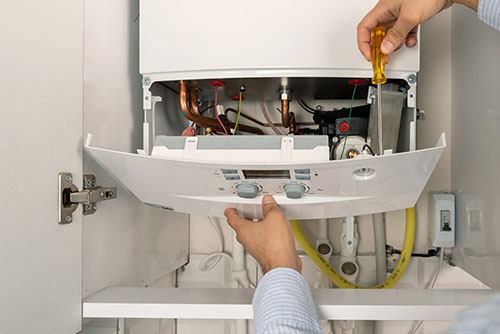
Professional furnace installation for reliable and energy-efficient heating
Furnace Installation in Tucson, AZ
At Tucson Heating and Air Pros, we offer professional furnace installation services designed to keep your home or business warm and energy-efficient. Whether you are replacing an outdated system or installing a new unit, our skilled technicians ensure proper sizing, setup, and performance for long-term comfort and reliability.
Furnace Installation in Tucson, Arizona – Tucson Heating and Air Pros
We are your local Tucson Heating and Air Pros, and furnace installation is a job we approach with the detail and precision it deserves. In a city like Tucson, where the heating season is relatively short but genuinely cold when it arrives, a properly installed furnace is the foundation of comfortable, safe winters in your home. Getting the installation right — correct sizing, correct venting, correct gas supply connections, correct integration with your existing ductwork and cooling system — means the furnace performs reliably for 15 to 20 years. Getting it wrong means ongoing problems, inefficiency, and potentially safety concerns from the first season.
We have been doing furnace installations throughout Tucson, Arizona for years. We know how Tucson homes are built — the older ranch-style construction in midtown, the newer stucco homes in Marana and Sahuarita, the custom builds in the Catalina Foothills. We know how to size a furnace correctly for the specific heat loss of a Tucson home rather than simply matching the tonnage of the old unit. And we know the Tucson-specific installation considerations that matter for long-term performance in this climate. When you are ready for a new furnace in your Tucson home, we are the team to call.
Contact us today to discuss furnace installation in Tucson.
Our Furnace Installation in Tucson Arizona
Furnace Installation
Installing a furnace correctly in a Tucson home requires more than matching the size of the old unit and connecting it to the existing ductwork. The previous system may have been sized wrong from the beginning — a problem that gets repeated installation after installation unless someone does the work properly. We perform a genuine load calculation for every furnace installation in Tucson, accounting for the actual heat loss of the home based on insulation, window area, ceiling height, and Tucson’s specific winter design temperatures. That accurate sizing is the starting point for an installation that performs correctly from day one.
Common Reasons Tucson Homeowners Choose Furnace Installation
- Existing furnace is 18 or more years old and no longer heating the home reliably through Tucson winters
- Repair costs on the current system have become frequent and the repairs no longer make financial sense
- Heat exchanger failure creating a safety concern that makes continued operation inadvisable
- Moving into a Tucson home with a furnace that has no service history and unknown remaining life
- Existing furnace was oversized and has always short-cycled without heating the home evenly
- Home renovation or addition requiring a furnace with greater heating capacity
- Converting from electric resistance heating to a gas forced-air system for improved comfort
- Replacing a system with discontinued parts that makes ongoing repair impractical
- Upgrading from a standard-efficiency furnace to a high-efficiency condensing unit
If you smell gas or suspect a gas leak, go outside immediately and call 911 – this is a serious emergency that needs urgent attention from the gas company.
Our furnace installation process in Tucson covers every step from load calculation through final commissioning. We remove the old unit completely, including refrigerant recovery if the system is integrated with cooling equipment, dispose of it properly, and prepare the installation site. We evaluate the existing ductwork for any modifications needed to support the new furnace’s airflow requirements — an issue particularly relevant in older Tucson homes where ductwork may be undersized for modern high-efficiency equipment. After installation, we verify gas pressure at the manifold, test burner flame pattern, check heat exchanger integrity, verify flue venting meets code for the new unit’s venting requirements, test all safety controls, and run the furnace through full heating cycles before we consider the job complete. Reach out to us for assistance planning your furnace installation.
High Efficiency Furnace Installation
High-efficiency condensing furnaces — those rated at 90 percent AFUE or higher — represent a meaningful upgrade over standard mid-efficiency equipment, and in Tucson they present specific installation considerations that differ from what is required for a conventional furnace. The condensing process in a high-efficiency furnace produces both combustion byproducts and liquid condensate that require different venting and drainage than older equipment. Getting these details right is essential for both safety and long-term performance.
Common Reasons Tucson Homeowners Choose High-Efficiency Furnace Installation
- Replacing an aging mid-efficiency furnace with equipment that operates at significantly lower fuel consumption
- Existing furnace venting needs to be replaced anyway, making the transition to PVC condensing venting practical
- Long-term energy savings on natural gas over Tucson’s moderate but consistent winter season
- New construction or major renovation specifying high-efficiency mechanical systems throughout
- Home performance improvement project targeting reduced utility costs across all systems
- Replacing a system in a Tucson home with a tight mechanical room that benefits from direct sidewall venting rather than traditional chimney flue
- Pairing a new high-efficiency furnace with a variable-speed air handler for improved air distribution
- Desire for a two-stage or modulating burner system that runs more quietly and maintains more even temperatures
- Home has existing PVC condensate drainage infrastructure from a previous high-efficiency unit
High-efficiency furnace installation in Tucson requires specific technical knowledge around condensing venting, condensate management, and the commissioning requirements for two-stage and variable-speed equipment. The PVC vent pipes used on condensing furnaces terminate through an exterior wall or roof rather than through a chimney flue, and the termination location and configuration must meet specific clearance and orientation requirements. The condensate produced during normal operation must drain to a proper drain — not an improvised collection point. Variable-speed and two-stage furnaces require thermostat compatibility and in some cases specific wiring configurations that differ from what a standard-efficiency system uses. We handle all of these details correctly on every high-efficiency installation we perform in Tucson, from equipment selection through full performance verification. The result is a furnace that operates at its rated efficiency from day one rather than one that is installed correctly in appearance but configured in ways that undermine its actual performance.
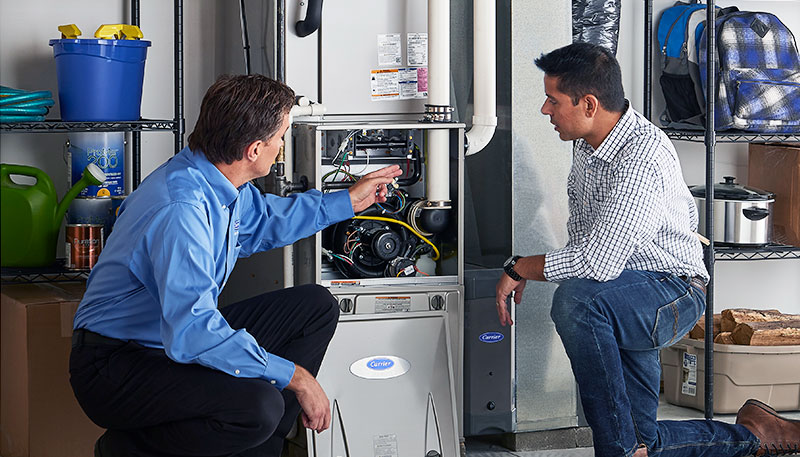
Why Tucson Homeowners Choose Tucson Heating and Air Pros
We Size Furnaces Correctly for Tucson Homes
Furnace sizing errors are common throughout the industry, and the consequences in Tucson homes are real. An oversized furnace short-cycles — it heats the area near the thermostat quickly without distributing heat evenly through the home, creating temperature variation between rooms and running the blower through too many brief cycles that increase wear. An undersized furnace in a cold Tucson winter runs continuously without maintaining the set temperature. We perform a proper load calculation for every installation, accounting for your home’s specific characteristics, and explain the recommended size and why it is right for your situation before we begin the work.
Installation Quality That Determines Long-Term Reliability
The details of how a furnace is installed affect how it performs for the next fifteen to twenty years. Gas connections that are pressure-tested after installation do not develop leaks. Duct connections sealed properly at the furnace cabinet maintain the airflow the system was designed to deliver. Venting installed with the correct slope, correct clearances, and correct termination configuration works correctly throughout the heating season rather than causing condensation or backdrafting problems. We install with the level of detail that produces a furnace that runs reliably through every Tucson winter for the life of the equipment.
We Know How Tucson Homes Are Built
Furnace installation in a Tucson home from the 1960s is a different job than installation in new construction in Marana. Original ductwork from decades past may have sizing or condition issues that affect what the new furnace can deliver. Attic conditions in Tucson — with summer temperatures routinely exceeding 140 degrees — affect how ductwork materials perform and how supply air temperature changes between the furnace and the register. Homes in the Foothills often have complex layouts and mechanical spaces that require more planning for equipment placement and venting. We bring that local knowledge to every installation assessment in Tucson.
Safety Is Built Into Every Installation
Every furnace installation we complete in Tucson includes a full safety verification — gas leak test at all new connections, combustion analysis to confirm the burner is operating correctly, flue venting test to confirm combustion gases are properly exhausted, and CO detector location check. We do not hand off a new furnace installation without confirming it is operating safely. This is the professional standard that every Tucson homeowner should expect from any company doing furnace installation work in their home.
Clear Communication Through the Entire Process
We explain the equipment options, the sizing rationale, what the installation involves, and what you can expect from the finished system — before we do any work. When something comes up during the installation that affects the project, we communicate about it immediately. You are never surprised by what we did or what the work involved. That approach has built our reputation throughout the Tucson community and it is how we operate on every job.
Our Service Process
Step 1: Home Assessment and Equipment Selection
Contact us today to schedule a home assessment for your furnace installation. We evaluate your home’s heat loss, existing ductwork, gas supply, and mechanical space, then present the right equipment options and explain the performance differences so you can make an informed choice.
Step 2: Installation Scheduling and Preparation
Once you select the system, we order the correct equipment and schedule the installation. We let you know what to expect on installation day and what, if anything, you need to do to prepare your Tucson home for the work.
Step 3: Professional Furnace Installation
We remove the old unit, prepare the installation site, install the new furnace and all associated components — gas connections, venting, electrical, ductwork connections, and condensate drainage for high-efficiency equipment — and verify every connection before testing the system.
Step 4: Full Commissioning and System Walkthrough
We commission the furnace completely — testing combustion, verifying all safety controls, confirming airflow, and running the system through full heating cycles. We walk you through the new thermostat and system operation before we leave your Tucson home. The system is confirmed working correctly before we close the job.
Service Area in and Around Tucson Arizona
We perform furnace installations throughout the Tucson metro area and surrounding Pima County communities. Our installation service area covers all of Tucson including midtown, the east side, Catalina Foothills, south Tucson, and the University district, as well as Marana, Oro Valley, Sahuarita, Green Valley, Vail, Rita Ranch, and Flowing Wells. We serve homes throughout the greater Tucson region.
Reach out to us for assistance confirming coverage in your specific Tucson area location.
Professional Furnace Installation vs DIY Attempts
Furnace installation is work that involves gas supply, combustion, venting, and in most Tucson jurisdictions, permit requirements. Attempting furnace installation without professional training and proper permits creates hazards and complications that extend well beyond the immediate installation.
Gas connection work is the most critical element. Every gas connection made during furnace installation — at the gas shutoff, at the union, at the manifold — must be pressure-tested for leaks after completion. Professional technicians use a manometer or calibrated pressure gauge and specific test procedures to verify no leaks exist before the system is operated. A homeowner working from a video tutorial who does not have these instruments and procedures cannot verify gas connection integrity with confidence. A gas leak at a furnace connection that is not detected and corrected before the system is operated creates a fire and explosion hazard.
Venting is the second major concern. Standard-efficiency furnaces vent through a metal flue connected to a chimney or dedicated B-vent. High-efficiency condensing furnaces vent through PVC pipes that terminate directly through an exterior wall. Each type has specific clearance requirements, slope requirements, and configuration rules. Venting installed incorrectly on a standard-efficiency furnace can allow combustion backdrafting — flue gases being drawn back into the living space rather than exhausting outside. Venting installed incorrectly on a high-efficiency condensing furnace can cause condensate to accumulate where it should not, blocking the vent or damaging the equipment. Either type of venting problem creates safety and reliability issues that may not appear immediately but will cause problems over the first heating season.
Electrical connections on modern furnaces involve control board wiring, thermostat wiring, and in the case of variable-speed equipment, specific accessory wiring that must be correct for the system to operate as designed. Control board wiring errors on high-efficiency two-stage or variable-speed equipment can prevent the system from operating at its rated efficiency, often without any obvious malfunction indicator.
In Tucson, permits are required for new furnace installations. An unpermitted installation creates complications for homeowner’s insurance and future home sale. Contact us today for professional furnace installation in Tucson — done correctly, safely, and to the standards that produce reliable long-term performance.
Heating & Air Conditioning Services
Complete Home Comfort Solutions for Your Property
From heating system repairs to air conditioning maintenance and installations, our team has the tools and expertise to keep your home or business comfortable year-round. We deliver reliable, high-quality HVAC service you can count on.
We Deliver Expert Results
Don’t settle for temporary fixes. We combine years of hands-on experience with modern technology to deliver long-lasting heating and cooling solutions. Our team values your time, your comfort, and your property.
- Heating System Repair & Maintenance
- Furnace Repair & Installation
- Air Conditioning Services
- AC Repair & Tune-Ups
- HVAC Diagnostics & System Checks
- Indoor Comfort Solutions
Frequently Asked Questions
What size furnace does my Tucson home need?
The correct size depends on a proper heat loss calculation accounting for your home’s square footage, insulation levels, ceiling height, window area, and Tucson’s winter design temperature. In Tucson’s relatively mild heating climate, most single-family homes require less heating capacity per square foot than homes in colder regions. The common shortcut of matching the old unit’s size often perpetuates an original sizing error. We calculate the correct size for your specific Tucson home and explain the reasoning before we recommend equipment.
What is the difference between 80% and 96% efficiency furnaces for a Tucson home?
An 80 percent AFUE furnace converts 80 cents of every dollar of gas consumed into usable heat and vents the remaining 20 percent through the flue. A 96 percent AFUE condensing furnace converts 96 cents of every dollar into heat, extracting additional heat from the combustion process and producing liquid condensate as a byproduct. In Tucson, where the heating season is roughly four to five months, the annual fuel savings from a 96 percent unit over an 80 percent unit are real but more modest than they would be in a colder city with seven or eight months of heating. We give you an honest assessment of the efficiency difference and payback timeline for your specific usage patterns.
How long does a furnace installation take in a Tucson home?
A standard furnace replacement in a typical Tucson home takes four to seven hours from start to finish, including removal of the old unit, installation of the new furnace, venting, gas connections, electrical connections, and full commissioning. Installations requiring ductwork modifications, electrical panel work, or transitions from a different fuel type take longer. We give you a realistic timeline when we assess your specific installation.
Do I need a permit to install a furnace in Tucson?
Yes. Furnace installations in Tucson require a mechanical permit and in most cases a gas permit as well. We handle the permit process for every furnace installation we perform in Tucson. An unpermitted furnace installation creates complications for homeowner’s insurance claims and can be flagged during a future home sale inspection.
Can I find a furnace installation company near me in Tucson?
Yes — we install furnaces throughout Tucson and all surrounding communities. Contact us today to schedule a home assessment and discuss your furnace installation needs.
Should I replace just the furnace or the entire HVAC system at once?
If your air conditioning system is also aging, there are practical advantages to replacing both together — shared labor, equipment compatibility, and avoiding a second major disruption in a few years. If the AC system is relatively new and in good condition, replacing only the furnace is often the right call. We give you an honest assessment of both systems when we evaluate your Tucson home so you can make an informed decision based on the actual condition of your equipment.
What happens to my old furnace when it is replaced?
We remove the old furnace completely during the installation, including all associated components we are replacing. Old furnace units are disposed of properly. If the old system contains refrigerant in an integrated heat pump configuration, we recover the refrigerant before removal using certified recovery equipment.
How do I know my new Tucson furnace is the right size?
A correctly sized furnace in Tucson runs in full heating cycles without short-cycling on mild days, maintains the thermostat setpoint on typical cold days, and does not run continuously on all but the most extreme cold nights. After installation, we verify operating cycle behavior and explain what normal operation looks like for your specific system. If you notice the system short-cycling or running constantly after installation, contact us today — those are signs worth investigating.
What is a two-stage furnace and is it worth it in Tucson?
A two-stage furnace operates at full capacity in cold weather and at a lower capacity — typically 65 to 70 percent — during mild weather. On a mild Tucson winter day in the 40s, a two-stage furnace runs at the lower stage, operating more quietly, cycling less frequently, and distributing heat more evenly than a single-stage unit running at full capacity. Over Tucson’s heating season, the longer, lower-output cycles also tend to produce more even temperatures throughout the home. Whether the upgrade is worth the additional investment depends on your home’s layout and your comfort priorities — we help you evaluate that honestly.
Does a high-efficiency furnace require special venting in a Tucson home?
Yes. High-efficiency condensing furnaces use PVC plastic pipe for venting rather than the metal B-vent used on standard-efficiency equipment. The PVC vent terminates through an exterior wall rather than through a chimney. This is actually simpler in many Tucson homes that have a convenient exterior wall access, and it eliminates the chimney venting that older furnaces depend on. During installation, we evaluate the best venting route for your specific Tucson home and install the termination with the correct clearances and configuration.
How long should a new furnace last in Tucson?
A well-installed, properly maintained furnace in Tucson should last 18 to 25 years. Because Tucson furnaces run fewer annual hours than those in colder climates, mechanical wear from run-time accumulates more slowly. However, Tucson’s dusty environment and the long off-season storage cycles affect filter and blower component life. Annual fall service extends the life of new equipment meaningfully and catches developing issues before they become significant failures.
What should I look for in a furnace installation company in Tucson?
Proper load calculation rather than equipment-matching sizing, transparent communication about what the installation involves, thorough commissioning that includes safety verification and performance testing, and a company that has real experience with Tucson homes and the local installation requirements. We bring all of these to every furnace installation we perform throughout the Tucson area. Contact us today to get started.
We are the trusted furnace installation experts in Tucson, Arizona. Whether you are replacing an aging system, upgrading to a high-efficiency unit, or installing a furnace in a home for the first time, Tucson Heating and Air Pros delivers professional installation that performs reliably through every Tucson winter. Contact us today to schedule your installation assessment.
Zip codes we serve: 85701, 85704, 85705, 85706, 85707, 85708, 85710, 85711, 85712, 85713, 85714, 85715, 85716, 85718, 85719, 85730, 85741, 85742, 85743, 85745, 85746, 85747, 85748, 85749, 85750, 85629, 85641, 85654, 85658