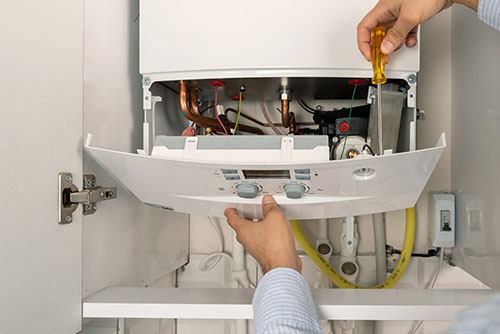
Complete heating services for homes and businesses near you
Heating Services in Tucson, AZ
At Tucson Heating and Air Pros, we offer complete heating services including installation, repair, and maintenance for all types of systems. Our team ensures your heating system runs efficiently and reliably during colder months, helping you stay comfortable while reducing energy costs. From routine maintenance to full system upgrades, we’ve got you covered.
Heating Services in Tucson, Arizona – Tucson Heating and Air Pros
We are your local Tucson Heating and Air Pros, and while this city is known for its summers, Tucson winters demand a heating system you can count on. Temperatures in the Tucson area routinely drop into the 30s overnight from November through February, and with the elevation variation across Pima County — from the valley floor through the Catalina Foothills and out toward Vail — some parts of the region see temperatures well below freezing on the coldest nights. A furnace that has been sitting idle since March may not perform the way you expect when November arrives.
We provide complete heating services throughout Tucson, Arizona — furnace repair, furnace installation, boiler repair and installation, and heat pump installation and repair. We know how Tucson’s heating season works: long dry summers of non-use followed by sudden demand when the desert cools down. We know the specific issues that show up in Tucson homes because of that cycle, and we have the experience to diagnose and fix them correctly. Whether your heating system is struggling to keep up with a cold Tucson morning or you are planning ahead for a replacement before next winter, we are the team to call.
Contact us today to schedule heating service in Tucson.
Our Heating Services in Tucson Arizona
Furnace Repair
When a furnace fails in Tucson, it usually happens in one of two ways: a sudden breakdown when the heat first kicks on in October or November after months of non-use, or a gradual decline in performance that becomes obvious when a cold snap really tests the system. Both situations require accurate diagnosis and professional repair. We handle furnace repair throughout Tucson and are familiar with the specific wear patterns common in desert-climate furnaces.
Common Problems We Fix
- Furnace that turns on but shuts off after a short run without heating the home to temperature
- No ignition — the furnace calls for heat but never fires
- Unusual burning smell when the heat first kicks on after a long off-season period
- Weak airflow from registers despite the furnace running normally
- Thermostat calling for heat but the furnace not responding at all
- Carbon monoxide detector alarms triggering near the furnace area
- Cracked or compromised heat exchanger — a serious safety concern
- Blower motor running continuously or at the wrong speed
- Gas valve failures preventing fuel from reaching the burners
If you smell gas or suspect a gas leak, go outside immediately and call 911 – this is a serious emergency that needs urgent attention from the gas company.
Our furnace repair diagnostic in Tucson goes well beyond checking whether the unit fires. We inspect the heat exchanger for cracks and corrosion — a compromised heat exchanger can allow combustion gases including carbon monoxide to enter the living space, which is a genuine safety hazard. We test combustion efficiency, verify the flue system is venting properly, check all ignition components, and test the blower and limit controls. Tucson’s dusty environment means furnace components including burners and filters accumulate debris quickly during off-season storage. We address the root cause of the failure and verify that the repaired system is operating safely and efficiently before we leave.
Furnace Installation
Replacing a furnace in a Tucson home is a more nuanced job than it might appear. The mild heating climate means homeowners often defer replacement longer than they should, running an aging furnace past the point where it is operating efficiently or reliably. When the replacement decision is made, sizing the new unit correctly for the specific home and pairing it correctly with the existing air conditioning system and ductwork is critical for long-term performance.
Common Problems We Fix
- Existing furnace repeatedly failing with escalating repair costs that no longer make financial sense
- System over 18 to 20 years old with declining efficiency and increasing operational issues
- Furnace that was originally oversized and short-cycles rather than heating the home evenly
- Ductwork that is incompatible with the current furnace’s airflow requirements
- Carbon monoxide concerns from a heat exchanger that cannot be safely repaired
- Home renovation or addition requiring a heating system with greater capacity
- Transition from electric resistance heating to gas forced-air for improved efficiency
- Replacing a unit with an obsolete or discontinued parts supply that makes ongoing repair impractical
- Moving into a Tucson home where the existing furnace has no service history
We size every new furnace installation in Tucson using a proper load calculation that accounts for the home’s square footage, insulation levels, ceiling height, window area, and how the structure is oriented. In Tucson, where heating loads are moderate compared to colder climates, oversizing is a more common mistake than undersizing — an oversized furnace will short-cycle in mild weather and heat unevenly. After installation, we verify burner operation, gas pressure, airflow through the duct system, and thermostat integration before considering the job complete. We also verify that the venting system for the new unit meets current safety standards.
Boiler Repair and Installation
Boilers occupy a specific niche in the Tucson heating landscape. While far less common here than in the Northeast or Midwest, they exist in older custom homes, some historic properties, and certain commercial-to-residential conversions throughout the city. When you have a boiler in Tucson and it develops a problem, finding a company that actually knows these systems — not one that will diagnose it by guessing — matters. We repair and install boilers throughout the Tucson area and bring the same diagnostic discipline to hydronic systems that we bring to forced-air equipment.
Common Problems We Fix
- Boiler losing system pressure and requiring frequent water additions to maintain operation
- Uneven heat distribution with some radiators or baseboard zones not warming properly
- Kettling or rumbling sounds from inside the boiler during operation
- Circulator pump failures preventing hot water from moving through the distribution system
- Zone valve failures leaving certain areas of the home without heat
- Pilot outages or ignition system failures on older atmospheric boiler models
- Expansion tank failures causing pressure relief valve discharge
- Leaks at fittings, valves, or connections within the hydronic system
- Control board or aquastat failures affecting boiler operation and temperature regulation
If you smell gas or suspect a gas leak, go outside immediately and call 911 – this is a serious emergency that needs urgent attention from the gas company.
Boiler systems involve a distinct set of technical considerations compared to forced-air systems. Water chemistry, system pressure, circulation, zone control, and venting all interact in ways specific to hydronic heating. We approach every boiler repair with a full system assessment — not just the component that appears to have failed. On new boiler installations in Tucson homes, we match the output capacity to the actual heat distribution system and verify that piping, expansion capacity, and venting all meet current standards for safe and efficient operation.
Heat Pump Installation and Repair
Heat pumps are an increasingly practical heating and cooling solution for Tucson homes. Because Tucson winters are relatively mild by national standards, heat pumps operate efficiently through most of the heating season — they only struggle significantly when temperatures drop well below freezing, which is relatively uncommon at Tucson’s elevation. The efficiency advantage of a heat pump over a gas furnace during mild-to-moderate winter conditions makes them worth serious consideration for many Tucson homeowners, especially those without existing gas service.
Common Problems We Fix
- Heat pump blowing cool or room-temperature air in heating mode instead of warm air
- System running in emergency heat mode continuously, indicating a primary heat pump failure
- Defrost cycle failures causing the outdoor unit to ice up excessively in cold weather
- Refrigerant leaks reducing both heating and cooling performance
- Reversing valve failures preventing the system from switching between heating and cooling modes
- Compressor failures or capacitor issues preventing outdoor unit operation
- Thermostat or control board issues causing incorrect mode selection or heat strip activation
- Balance point misconfiguration causing the auxiliary heat strips to run too frequently
- Outdoor fan motor failures affecting heat exchange in both heating and cooling operation
Heat pump diagnostics require understanding how the refrigeration cycle works in both directions — the system that cools your Tucson home in summer is the same system that heats it in winter, simply operating in reverse through the reversing valve. A fault that appears only in heating mode, such as a reversing valve stuck in cooling position, requires a technician who understands the full refrigerant circuit in both operating modes. We test heat pump systems comprehensively in both modes when diagnosing heating complaints, rather than assuming the issue is isolated to a single component. On new installations, we configure the balance point settings to optimize efficiency for Tucson’s specific winter temperature profile.
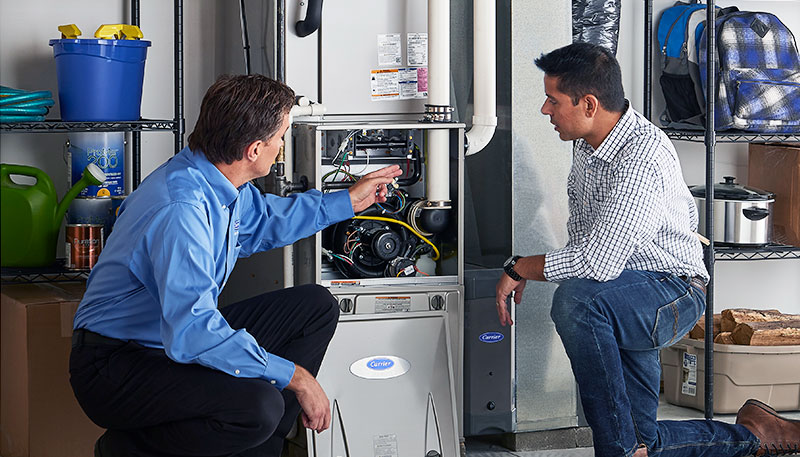
Why Tucson Homeowners Choose Tucson Heating and Air Pros
We Know How Tucson’s Heating Season Affects Equipment
In colder climates, heating equipment gets steady use from October through April. In Tucson, furnaces sit idle for seven or eight months and then get called into action when a cold front arrives in November. That off-season storage cycle creates specific problems — dust accumulation on burners and heat exchangers, gas valve sluggishness, and igniter components that degrade without regular operation. We understand this pattern because we see it every fall across Tucson homes, and our diagnostics account for it specifically rather than approaching a Tucson furnace the same way we would approach one in a cold-climate city.
Accurate Diagnosis Before Any Recommendation
We do not arrive at a Tucson heating call and recommend a furnace replacement because the unit is making noise. We diagnose the actual problem — test the heat exchanger, check the gas pressure, evaluate the ignition system, test the blower, verify the controls. If the furnace is repairable and the repair makes sense relative to the system’s age and condition, we tell you that. If the system has a safety concern or is genuinely beyond economical repair, we tell you that too. You get the honest finding, not a recommendation shaped by what generates the larger job.
Safety Is Not a Secondary Concern
Heating systems involve combustion gases, carbon monoxide risk from cracked heat exchangers, and in some cases gas supply components that require precise handling. We treat every heating service call in Tucson with the safety attention it deserves. We check heat exchangers on every furnace we service, verify CO detector placement with homeowners when we notice it is missing or incorrectly placed, and handle gas components with the care that represents real professional practice rather than a shortcut approach.
We Size Equipment Correctly for Tucson Homes
Equipment sizing errors are one of the most common problems we encounter when evaluating existing heating systems in Tucson. Homes that were built in the 1960s and 1970s, when energy efficiency standards were minimal, were often fitted with oversized furnaces that have been replaced with equally oversized units simply by matching the tonnage of the previous system. We use actual load calculations rather than equipment matching to determine the right size for your specific Tucson home. A correctly sized furnace runs more efficiently, heats more evenly, and lasts longer than one that is oversized and short-cycles.
Dependable Scheduling and Emergency Response
When Tucson has an unusual cold snap that drops overnight temperatures into the low 20s, heating system failures become urgent. We respond to heating emergencies throughout the Tucson area because we know what those conditions mean for families, elderly residents, and pets. We keep scheduled appointments, we communicate before we arrive, and we treat emergency calls with the urgency they require.
Our Service Process
Step 1: Contact Us and Tell Us What Is Happening
Reach out to us today and describe your heating issue. When did it start, what does the system do or fail to do, and are there any unusual sounds or smells? We use this information to dispatch the right technician with the right equipment to your Tucson home.
Step 2: Full Heating System Diagnostic
Our technician performs a complete diagnostic of your heating system — ignition components, heat exchanger, combustion, blower, controls, gas supply, and venting. We identify the root cause of the problem before any recommendations are made.
Step 3: Clear Explanation of Findings and Options
We explain what we found in plain terms. You understand the problem, the repair or replacement options, and what each involves before we do any work. No surprises, no technical jargon used to obscure what is actually happening.
Step 4: Professional Repair or Installation with Full Testing
We complete the work thoroughly, then test the system through a full operating cycle — verifying heat output, airflow, combustion safety, and control function before we leave your Tucson home.
Service Area in and Around Tucson Arizona
We provide heating services throughout the Tucson metro area and surrounding Pima County communities. Our service area includes all of Tucson, Marana, Oro Valley, Sahuarita, Green Valley, Vail, Rita Ranch, Flowing Wells, South Tucson, and the greater metro region. The elevation range across our service area means heating needs vary — from the valley floor to the Catalina Foothills — and we understand how that affects equipment performance and sizing.
Contact us today if you want to confirm whether we cover your specific location. We are happy to let you know right away.
Professional Heating Repair vs DIY Attempts
Heating systems involve risks that make DIY repair attempts genuinely dangerous in ways that AC work typically does not. Gas furnaces and boilers involve combustion, fuel supply, and the risk of carbon monoxide — a colorless, odorless gas that is produced by incomplete combustion and can reach dangerous concentrations in a home with a compromised heat exchanger or improperly venting flue.
A cracked heat exchanger is the most serious furnace safety concern, and it is also one that is very easy to miss without proper training and inspection technique. The heat exchanger separates the combustion gases from the air that circulates through your home. Even a small crack allows carbon monoxide to enter the supply air stream. Homeowners attempting furnace repair often lack the knowledge and equipment to properly inspect the heat exchanger, and the consequences of missing a crack range from chronic low-level CO exposure to acute poisoning.
Gas component work — replacing gas valves, adjusting gas pressure, handling gas line connections — requires specific training and the right equipment to do safely. An incorrect gas valve replacement or a loose fitting creates a leak and fire hazard that can have catastrophic results. This is not work for an internet tutorial approach.
Beyond safety, there is the diagnostic accuracy problem that plagues DIY heating repair. Tucson homeowners often attempt to fix the most obvious symptom — replacing an igniter, cleaning burners, resetting controls — without understanding what caused the failure. A furnace igniter that failed because the heat exchanger is cracked and triggering the limit switch will fail again after replacement unless the underlying issue is found. A furnace that short-cycles will continue to short-cycle after a filter change if the real cause is a blower motor issue or a mismatched thermostat. Professional diagnosis finds the actual cause. Reach out to us for assistance with any heating issue in your Tucson home rather than attempting repairs that could be dangerous or that leave the root cause in place.
Heating & Air Conditioning Services
Complete Home Comfort Solutions for Your Property
From heating system repairs to air conditioning maintenance and installations, our team has the tools and expertise to keep your home or business comfortable year-round. We deliver reliable, high-quality HVAC service you can count on.
We Deliver Expert Results
Don’t settle for temporary fixes. We combine years of hands-on experience with modern technology to deliver long-lasting heating and cooling solutions. Our team values your time, your comfort, and your property.
- Heating System Repair & Maintenance
- Furnace Repair & Installation
- Air Conditioning Services
- AC Repair & Tune-Ups
- HVAC Diagnostics & System Checks
- Indoor Comfort Solutions
Frequently Asked Questions
How do I know if my furnace is safe to use in my Tucson home?
The most reliable way to confirm furnace safety is professional inspection that includes a heat exchanger examination. At home, you can watch for signs like flickering or yellow burner flames (should be blue), soot or discoloration around the furnace, frequent headaches when the heat is running, or a carbon monoxide detector alarm. If your CO detector triggers or you smell combustion gases inside the home, do not use the furnace and call for service immediately. Contact us today for a thorough heating system safety inspection.
How often does a Tucson furnace need to be serviced?
Annual service in the fall — before the heating season begins — is the standard recommendation for Tucson furnaces. Given the long off-season in this climate, fall service addresses the dust accumulation and component condition that develops during months of non-use. It also ensures the system is operating safely and efficiently when you actually need it in November and December.
What is the average lifespan of a furnace in Tucson, Arizona?
A well-maintained furnace in Tucson can last 18 to 25 years, longer than in colder climates where systems run many more hours per season. The lower annual run time is offset somewhat by the dust environment, which stresses filters, blower motors, and heat exchangers over time. Units that go without regular maintenance throughout their lives tend to reach failure earlier. We can give you an honest assessment of where your specific furnace sits in its useful life.
Should I repair or replace my Tucson furnace?
The decision depends on age, repair history, and the specific problem. A furnace under 10 years old with a single failed component is almost always worth repairing. A furnace over 18 years old with a significant failure — particularly a heat exchanger issue — is usually a replacement candidate. In the middle range, the cost of the repair relative to the age and remaining useful life of the system is the main consideration. We give you an honest read when we assess your system.
What does a heat pump do differently from a furnace in winter?
A furnace generates heat by burning fuel and transferring that heat to supply air. A heat pump moves heat — it extracts heat energy from outdoor air (even cold outdoor air) and transfers it inside. This is more efficient than generating heat from scratch, which is why heat pumps have a lower operating cost per BTU than electric resistance heat and can be competitive with gas depending on energy prices. In Tucson’s mild winters, heat pumps work well through most of the season with minimal reliance on backup electric heat strips.
Why does my furnace smell when I first turn it on in the fall?
A mild dusty or musty smell when a Tucson furnace first fires for the season is common — it is dust burning off the heat exchanger and burners after months of non-use. This should clear within the first few heating cycles. A persistent burning smell, a smell of burning plastic or rubber, or any smell that does not dissipate after several uses warrants professional inspection. A strong smell of rotten eggs or sulfur is a gas odor — go outside immediately and call 911.
Can a heat pump heat my Tucson home effectively?
Yes, for most Tucson winters. Heat pumps lose efficiency as outdoor temperatures fall, but Tucson’s relatively mild winters mean temperatures rarely stay below the 30s for extended periods at valley floor elevations. A properly sized heat pump handles the vast majority of Tucson heating season efficiently. On nights when temperatures drop into the low 20s — less common but not unheard of — the backup heat strips in the air handler supplement the heat pump. We can evaluate whether a heat pump makes sense for your specific Tucson home’s heating needs.
What causes a furnace to run but not heat my home in Tucson?
The blower running without heat output usually means the burners are not igniting — igniter failure, gas valve failure, or a safety lockout triggered by the control board. A furnace that runs but produces less heat than expected often indicates dirty burners, restricted airflow from a clogged filter, or a heat exchanger problem triggering the high-limit switch. We identify the specific cause in your Tucson home rather than replacing components by guessing.
Do you offer boiler services in Tucson?
Yes. While boilers are uncommon in Tucson compared to forced-air systems, we service and install them throughout the area. If your Tucson home has a hydronic heating system and it is not performing correctly, we have the expertise to diagnose and repair it properly.
How do I get my heating system ready for a Tucson winter?
Replace or check the air filter. Verify that all supply registers throughout the home are open and unobstructed. Test the thermostat in heating mode before the cold arrives to confirm the system fires. Check your CO detector batteries. Beyond that, a professional fall service that checks the heat exchanger, burner condition, ignition components, and blower is the best preparation for the Tucson heating season. Contact us today to schedule fall service before the cold weather arrives.
Is it worth installing a new high-efficiency furnace in Tucson?
High-efficiency furnaces — those rated at 90 percent or higher AFUE — save more energy per heating hour than standard-efficiency units. In Tucson, because the heating season is relatively short, the total savings are more modest than they would be in a cold-climate city. Whether the efficiency upgrade is worth the additional upfront investment depends on your specific heating usage, gas rates, and what you are replacing. We give you a realistic picture of the performance and efficiency difference so you can make an informed decision.
What should I check if my heat pump is blowing cool air in heating mode?
First check the thermostat to make sure it is set to heat mode rather than cool or fan only. Verify the system is not in defrost mode — heat pumps periodically reverse to clear frost from the outdoor coil, which temporarily blows cool air for a few minutes. If the system is consistently blowing cool air in heat mode for more than 10 minutes, there may be a reversing valve issue, a refrigerant problem, or a control fault. Contact us today for a proper diagnostic.
Do you handle emergency heating calls in Tucson?
Yes. When temperatures drop unexpectedly and a Tucson home’s heating system fails, we respond to emergency calls. Reach out to us for assistance and we will get a technician to your home as quickly as possible.
We are the trusted local heating experts in Tucson, Arizona. When your furnace, boiler, or heat pump needs professional attention — whether it is an emergency call on a cold November morning or planned service before the winter season — Tucson Heating and Air Pros is the team you can count on. Contact us today to schedule your heating service.
Zip codes we serve: 85701, 85704, 85705, 85706, 85707, 85708, 85710, 85711, 85712, 85713, 85714, 85715, 85716, 85718, 85719, 85730, 85741, 85742, 85743, 85745, 85746, 85747, 85748, 85749, 85750, 85629, 85641, 85654, 85658