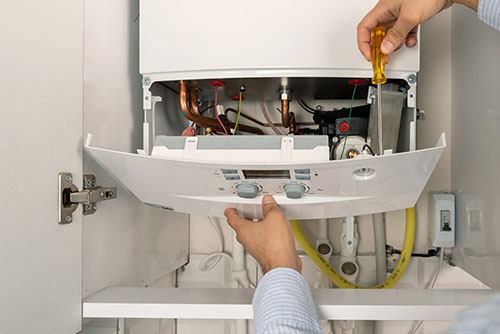
Fast and dependable furnace repair services available near you
Furnace Repair in Tucson, AZ
At Tucson Heating and Air Pros, we provide fast and reliable furnace repair services for homes and businesses. Whether your furnace won’t turn on, isn’t heating properly, or is making unusual noises, our experienced technicians quickly diagnose and fix the issue to restore your comfort. We’re available 24/7 for emergency repairs.
Furnace Repair in Tucson, Arizona – Tucson Heating and Air Pros
We are your local Tucson Heating and Air Pros, and furnace repair is something we take seriously even in a desert climate. Tucson winters are mild compared to most of the country, but when overnight temperatures drop into the 30s and cold fronts push down from the north, a furnace that will not fire or that is struggling to heat the home is a real problem. The fact that most Tucson furnaces sit idle for seven or eight months before being called into service in November makes the issue worse — components degrade during extended non-use, and the first cold week of the year reveals every problem that developed over the summer.
We have been repairing furnaces throughout Tucson, Arizona for years. We know what fails in Tucson heating systems specifically — the dust accumulation on burners and heat exchangers, the igniter degradation from extended non-use, the gas valve sluggishness that develops over a long summer. We also know that furnace problems in this climate carry real safety risks that demand professional attention, not a DIY approach based on a troubleshooting video. When your Tucson home’s heating system stops working or starts behaving abnormally, we are the team to call.
Contact us today for furnace repair anywhere in the Tucson area.
Our Furnace Repair in Tucson Arizona
Furnace Repair
A furnace that stops heating a Tucson home in November or December creates an immediate comfort problem and potentially a safety concern. Tucson’s desert winters can bring overnight lows into the high 20s — especially at higher elevations around the Catalina Foothills and out toward Vail and Sahuarita — and a home without functioning heat in those conditions is genuinely uncomfortable and risky for vulnerable household members. We diagnose and repair furnaces throughout Tucson with accuracy and a clear commitment to getting the root cause, not just the symptom.
Common Problems We Fix
- Furnace that turns on, runs briefly, then shuts off before the home reaches the thermostat temperature
- No ignition at all — the system calls for heat but never fires or attempts to start
- Delayed ignition or a loud bang or pop when the burners light
- Burning or dusty smell when the heat runs — especially common on the first cold days in Tucson after a long summer off-season
- Weak airflow from registers even with the furnace running normally
- Thermostat calling for heat but the furnace not responding in any way
- Yellow or orange burner flames instead of the normal clear blue
- Blower running continuously in heating mode without shutting off between cycles
- Carbon monoxide detector triggering near the furnace or in the main living area
If you smell gas or suspect a gas leak, go outside immediately and call 911 – this is a serious emergency that needs urgent attention from the gas company.
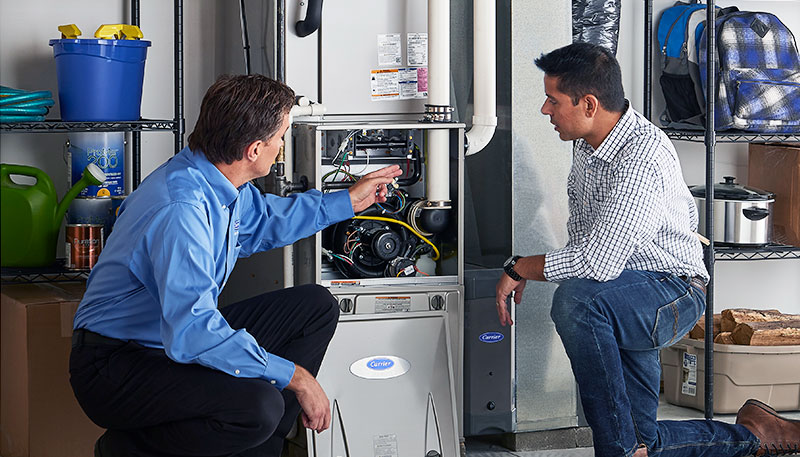
Every furnace repair call we handle in Tucson starts with a complete diagnostic — not a guess based on the most common problem we see. We check the ignition system components including the igniter and flame sensor, test the gas valve operation and inlet pressure, inspect the heat exchanger for cracks or corrosion, evaluate blower motor function and capacitor condition, test the high-limit switch and safety controls, and verify flue venting. Tucson’s dusty environment means burner orifices and heat exchanger surfaces accumulate debris during long off-season periods, and that buildup affects both performance and safety. We address the actual cause of the failure so the repaired furnace performs reliably through the rest of the Tucson heating season and beyond.
Emergency Furnace Repair
Furnace failures do not schedule themselves for convenient business hours, and in Tucson, a heating failure on a cold January night is not something most households can wait on until Monday morning. We handle emergency furnace repair calls throughout the Tucson area because we live here and understand that when a home’s temperature drops overnight, it is a situation that demands prompt response — particularly for elderly residents, young children, and households with health vulnerabilities.
Common Problems We Fix
- Complete furnace shutdown with no heat output on a cold Tucson night
- Furnace that failed to restart after a power outage or utility interruption
- Gas valve failure or supply interruption preventing ignition on any cycle attempt
- Circuit board or control module failure causing the system to lock out entirely
- Cracked heat exchanger triggering the high-limit safety and preventing the system from running
- Blower motor failure leaving the furnace unable to distribute heat through the duct system
- Thermostat complete failure during a cold weather event
- Pressure switch faults on high-efficiency furnaces causing safety lockout
- Inducer motor failure preventing combustion air from being properly managed
If you smell gas or suspect a gas leak, go outside immediately and call 911 – this is a serious emergency that needs urgent attention from the gas company.
When we respond to an emergency furnace repair call in Tucson, we arrive prepared with the parts and diagnostic equipment to handle the most common failure modes immediately. We understand that time matters — we do not take extended diagnostic time on straightforward failures, and we communicate clearly about what we found and what it takes to restore heat. For more complex failures, we are honest about what the repair involves and work efficiently to complete it. Emergency situations demand real expertise and genuine responsiveness, not someone working from a manual on their first winter call. We have handled these situations across Tucson homes for years and know how to restore heat quickly and safely. Reach out to us for assistance the moment your Tucson heating system fails in cold weather.
Why Tucson Homeowners Choose Tucson Heating and Air Pros
We Know How Tucson’s Climate Affects Furnace Health
Most HVAC companies talk generally about furnace maintenance. We talk specifically about what happens to furnaces in Tucson. Seven or eight months of non-use in a dusty desert environment leaves burner surfaces coated with debris, filters packed with desert particulates, and igniter components that have not cycled since March. When fall arrives and Tucson homeowners turn the heat on for the first time, these are the conditions we know to check. Our furnace diagnostics account for the specific off-season effects that are particular to this climate, not a generic checklist designed for a furnace that runs all winter in Denver.
Safety First on Every Furnace Call
Furnaces involve gas combustion, heat exchangers that can crack and allow carbon monoxide into the living space, and venting systems that have to work correctly to keep combustion gases outside. We inspect the heat exchanger on every furnace service call in Tucson — not just on explicit safety inspection requests. We verify flue venting integrity and check CO detector placement with homeowners when we notice it is missing or incorrectly positioned. These are not upsells or add-ons. They are the professional standard that anyone working on combustion equipment in a Tucson home should apply consistently.
Root-Cause Diagnosis, Not Part Replacement
We see it regularly: a furnace igniter replaced without finding out why it failed, a limit switch reset without understanding what caused it to trip. The result is the same failure two weeks later, often in worse conditions. Every furnace repair we perform in Tucson starts with understanding the cause. If an igniter burned out early because the heat exchanger is cracked and triggering the high-limit before the burner achieves full combustion, we find that. If a limit switch tripped because of restricted airflow, we identify and address the restriction. Accurate diagnosis is what separates a repair that holds from a repair that creates a return call.
Honest Assessment of Repair vs Replacement
When a Tucson homeowner has an older furnace that failed, they deserve an honest read on whether to repair it or move on. A furnace under ten years old with a single component failure is almost always worth repairing. A furnace over eighteen years old with a cracked heat exchanger or a history of escalating repair needs is a different conversation. We give you the honest assessment every time — not a recommendation designed to generate a larger job, and not a repair recommendation that ignores a safety concern that makes replacement the right answer.
Reliable Scheduling and Genuine Emergency Response
We keep scheduled appointments. When you schedule furnace repair service in Tucson with us, we arrive when we said we would and communicate if anything changes. For emergency calls, we move quickly because we understand what a cold home in Tucson means in January. Fast, dependable response is not a marketing phrase for us — it is simply how we have always operated in this community.
Our Service Process
Step 1: Contact Us and Describe What Is Happening
Reach out to us today and tell us what your furnace is doing or failing to do. When did the problem start, what changed, are there any unusual sounds or smells? This helps us dispatch the right technician with the right parts to your Tucson home.
Step 2: Full Furnace Diagnostic at Your Home
Our technician performs a comprehensive diagnostic covering ignition components, heat exchanger condition, gas supply, blower operation, safety controls, and venting. We identify the root cause before making any repair recommendation.
Step 3: Clear Explanation Before Any Work Begins
We explain exactly what we found, what the repair involves, and what you can expect from the repaired system. You understand and approve everything before we proceed. No surprises, no work you did not agree to.
Step 4: Professional Repair with Full Safety and Performance Verification
We complete the repair correctly, then test the system through full heating cycles — verifying ignition, heat output, combustion safety, blower performance, and safety control operation before we leave your Tucson home.
Service Area in and Around Tucson Arizona
We provide furnace repair throughout the Tucson metro area and surrounding communities in Pima County. Our service area covers all of Tucson including midtown, the east side, the Catalina Foothills, south Tucson, and the University district, as well as Marana, Oro Valley, Sahuarita, Green Valley, Vail, Rita Ranch, Flowing Wells, and Drexel Heights. We serve homes throughout the greater Tucson region, including areas at higher elevations where cold winters hit hardest.
Contact us today if you need to confirm we serve your specific Tucson area location.
Professional Furnace Repair vs DIY Attempts
Furnace repair is one of the home service categories where attempting work without professional training creates the most serious risks. The consequences of a mistake are not a wasted afternoon — they can include gas leaks, fire hazards, and carbon monoxide exposure inside the home.
The heat exchanger is the clearest example. This is the component that separates combustion gases from the air supply circulating through your home. A crack in the heat exchanger — even a hairline crack — allows carbon monoxide to enter the supply air stream. CO is colorless and odorless. Without a properly functioning CO detector, a household can be exposed to dangerous levels without any visible warning. Identifying a cracked heat exchanger requires specific inspection technique and in some cases a combustion analyzer or pressure differential test. Homeowners attempting furnace repair without this knowledge and equipment may miss a cracked heat exchanger entirely — or may misidentify a visible discoloration as normal when it signals a developing crack.
Gas component work carries direct safety risk. Replacing a gas valve, adjusting manifold pressure, or disturbing gas line connections without the correct procedures and leak-testing steps can create a leak. In a Tucson home with natural gas supply, a leak that is not immediately detected creates a fire and explosion hazard. This is not work that should be approached without specific training and proper leak-testing equipment.
Ignition components — igniters, flame sensors, and gas valves — are the most commonly replaced parts in DIY furnace repair attempts. What Tucson homeowners often do not account for is the interaction between these components. A flame sensor that reads as failed may actually be failing because the heat exchanger problem described above is preventing a stable flame. Replacing the sensor without addressing the underlying cause means the new sensor fails in the same way within weeks.
Electrical control boards and safety switches add another layer. Modern furnaces have multi-stage safety lockout systems. A fault that appears as a single error code may actually involve two or three interacting problems. Working through these logically requires experience with how the specific furnace’s control logic operates. Resetting a lockout and assuming the problem is resolved leaves whatever caused the lockout in place.
We handle furnace repairs in Tucson homes correctly and safely, from ignition failures to heat exchanger concerns. Reach out to us for assistance rather than attempting furnace work that carries real risk to your household’s safety.
Heating & Air Conditioning Services
Complete Home Comfort Solutions for Your Property
From heating system repairs to air conditioning maintenance and installations, our team has the tools and expertise to keep your home or business comfortable year-round. We deliver reliable, high-quality HVAC service you can count on.
We Deliver Expert Results
Don’t settle for temporary fixes. We combine years of hands-on experience with modern technology to deliver long-lasting heating and cooling solutions. Our team values your time, your comfort, and your property.
- Heating System Repair & Maintenance
- Furnace Repair & Installation
- Air Conditioning Services
- AC Repair & Tune-Ups
- HVAC Diagnostics & System Checks
- Indoor Comfort Solutions
Frequently Asked Questions
How do I know if my Tucson furnace needs repair or replacement?
Age and the nature of the failure are the two main factors. A furnace under ten years old with a failed component is almost always worth repairing. A furnace over eighteen years old with a cracked heat exchanger, major heat-related component failure, or a pattern of escalating repairs is usually a replacement candidate. In the middle range, the repair cost relative to the remaining useful life of the system is the deciding factor. We give you an honest, specific assessment after we diagnose your Tucson furnace — not a generic answer designed to push a larger job.
Why does my Tucson furnace smell when it first turns on in fall?
A mild dusty or burning smell during the first few cycles of the Tucson heating season is very common. Dust that settled on the heat exchanger and burners over a long summer burns off when the unit first fires. This should clear within the first two or three heating cycles. If the smell persists beyond that, is strong, smells like burning plastic or rubber, or you notice any sulfur or rotten-egg odor, shut the furnace off and contact us today. A persistent smell or a gas odor is not normal and warrants professional inspection.
What causes a Tucson furnace to short-cycle?
Short-cycling — turning on and shutting off before the home reaches temperature — is usually caused by a dirty air filter restricting airflow and causing the heat exchanger to overheat and trip the high-limit safety switch. Other common causes include an oversized furnace that heats the area near the thermostat quickly without distributing heat evenly, or a thermostat placed in a location that sees localized warmth. Less commonly, a cracked heat exchanger that trips the high-limit is the cause. We identify the specific reason for short-cycling in your Tucson home rather than guessing.
Is it safe to run my Tucson furnace if the flame is yellow instead of blue?
No. A yellow or orange flame indicates incomplete combustion, which produces carbon monoxide rather than burning it fully. This is a safety concern that warrants shutting the furnace off and calling for professional service immediately. Common causes include dirty burners or a restricted combustion air supply. Do not operate a furnace with a yellow flame. Contact us today for an urgent diagnostic.
How long does a typical furnace repair take in Tucson?
Most single-component repairs — igniter replacement, flame sensor cleaning or replacement, capacitor swap, gas valve replacement — are completed in one to two hours from arrival to completion. More complex repairs involving heat exchanger assessment, control board diagnosis, or inducer motor replacement take longer. We give you a realistic timeline after the diagnostic before we proceed with any repair work.
Can I find a furnace repair company near me in Tucson for same-day service?
Yes. We handle same-day and emergency furnace repair calls throughout Tucson. Contact us today and we will dispatch a technician to your home as quickly as possible, with priority given to heating failures during cold weather events.
What is a heat exchanger and why does it matter in a Tucson furnace?
The heat exchanger is the metal component inside the furnace that separates the combustion gases from the air that circulates through your home. When it is intact, combustion stays on one side and your breathing air stays on the other. When it develops a crack — which happens from years of thermal cycling, especially in older Tucson furnaces — combustion gases including carbon monoxide can enter the supply air stream. We inspect the heat exchanger on every furnace call we handle in Tucson because this is the most safety-critical component in any gas furnace.
How do I know if my furnace has a cracked heat exchanger?
Symptoms that suggest a heat exchanger problem include a carbon monoxide detector alarming near the furnace, persistent headaches or nausea when the heat is running, the furnace shutting off on high-limit after short run times, and in some cases a visible discoloration or soot marks on the furnace cabinet exterior. Definitive diagnosis requires professional inspection using specific examination techniques and sometimes combustion gas analysis equipment. If you have any reason to suspect a heat exchanger issue in your Tucson home, contact us today for an inspection — do not continue running the furnace until it has been evaluated.
Why did my Tucson furnace stop working after a power outage?
Modern furnaces have electronic control boards that sometimes go into a fault lockout mode when power is interrupted abnormally. Restoring power does not always reset the lockout. Some furnaces require a manual reset at the unit. If a manual reset does not restore operation, the control board may have been affected by a voltage spike during the outage, or a secondary component failure may have been triggered. Contact us today and we will diagnose the specific issue with your furnace.
Should my Tucson furnace be serviced even if it seems to be working fine?
Yes, and in Tucson specifically the case for annual fall service is strong. Because Tucson furnaces sit idle from roughly March through October, dust accumulates on burners, heat exchangers, and blower components during that off-season period. A fall service cleans these components, checks the heat exchanger, verifies ignition system condition, and tests all safety controls before you depend on the system when temperatures drop. Most problems we catch in fall service are inexpensive to address when found early. The same problems discovered as emergency failures on a cold January night are more expensive and more disruptive.
What does a furnace tune-up include in Tucson?
A thorough furnace service in Tucson covers filter inspection and replacement, burner cleaning and flame pattern evaluation, heat exchanger visual inspection, igniter and flame sensor condition check, gas valve and manifold pressure verification, blower motor and capacitor testing, high-limit and safety control testing, flue venting inspection, and a full operational test cycle. We check CO detector placement and batteries as part of every furnace service call in Tucson because it takes thirty seconds and can matter significantly.
What should I do while waiting for furnace repair in my Tucson home?
Keep interior doors open to allow any residual heat to distribute more evenly. Use electric space heaters carefully, keeping them away from flammable materials and never leaving them unattended. Add extra blankets, especially for children and elderly household members. Do not use a gas range or oven as a heat source — this creates carbon monoxide risk. If the house temperature is dropping to genuinely unsafe levels, consider whether a short stay elsewhere makes sense while you wait for service. Contact us today and we will get to your Tucson home as quickly as possible.
We are the trusted furnace repair experts in Tucson, Arizona. When your heating system fails or starts behaving abnormally — whether it is a cold fall morning or a frigid winter night — Tucson Heating and Air Pros delivers accurate diagnosis, professional repair, and the responsiveness this community deserves. Contact us today to schedule your furnace repair service.
Zip codes we serve: 85701, 85704, 85705, 85706, 85707, 85708, 85710, 85711, 85712, 85713, 85714, 85715, 85716, 85718, 85719, 85730, 85741, 85742, 85743, 85745, 85746, 85747, 85748, 85749, 85750, 85629, 85641, 85654, 85658